Raising a Daughter Who Doesn’t Question Her Place
By: Stephanie Stevens
When I was a girl, I loved the woods. I loved the smell of damp leaves. I loved watching the sun break the horizon and watching the frosty land come to life. Sometimes, if I was lucky enough, I’d see a shooting star in the tree stand before the sun came up. Some of my most cherished memories are of walking behind dad, trying to match his stride—of course as quiet as possible. My blaze orange were hand-me-downs, sizes too big. But I always felt proud just to be included. Hunting was where I felt closest to my dad—and closest to myself.
But there were trips I wasn’t allowed to go on. There were moments when I was told no. Certain hunts were “for the guys.” Certain challenges were “too much.” Sometimes it was said gently. Sometimes it wasn’t. But the message was clear: there were limits to where I belonged. As a young girl, I internalized those limits even as I pushed against them. I learned to be grateful for the invitations I received and quiet about the ones I didn’t. I would just show up, not complain, and brave whatever weather we would face for opening weekend of gun deer season.
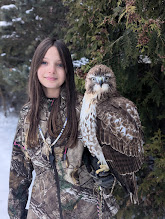
When I became pregnant with my daughter, I returned to the woods — not just for myself, but for her. I hunted while carrying her. I actually hunted when I was two days overdue with her. I sat quietly in the blind and felt her move inside me as I watched for any movement of deer moving through brush. Sometimes they move like grey-brown ghosts in the woods. Before she ever took her first breath, my daughter knew the rhythm of the land. I made a decision during that time: she would never question whether she belonged there.
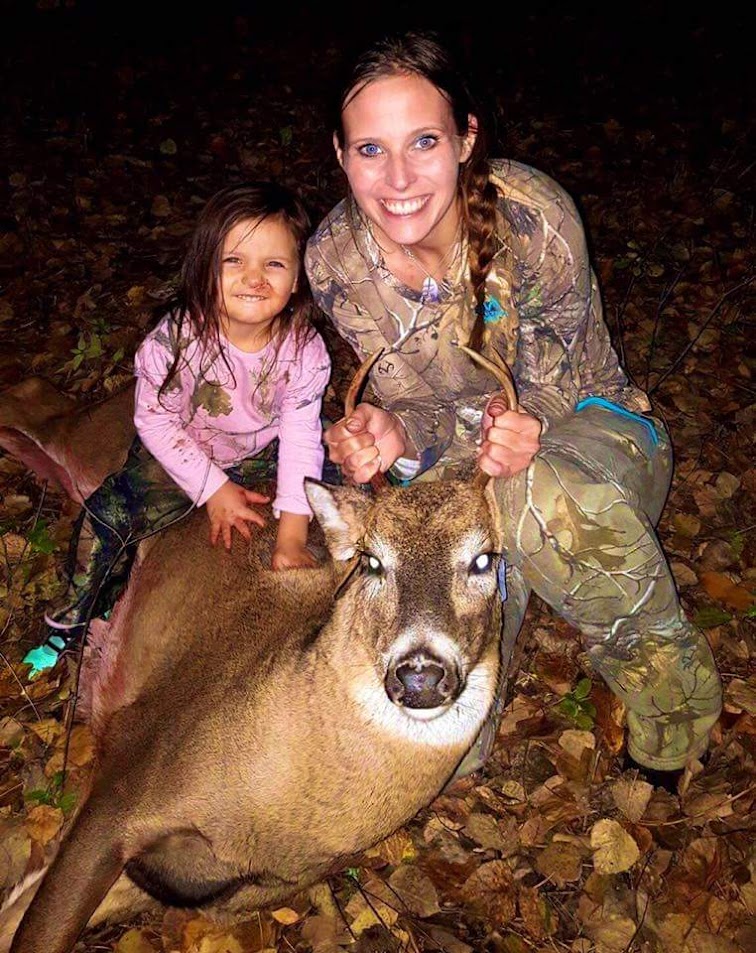
When she was just one year old, she tracked my deer. She followed the “red.” Her steps were small and unsteady, but she toddled her way through the woods while I held her hand for support. By three, she sat beside me on her first deer hunt and watched me harvest a doe. She watched with intent and curiosity. At that same age she helped butcher deer. We were very careful when she had a knife, but we wanted her to know exactly where her food came from—and always remember to give respect to the animal. Her childhood did not separate her from the reality of sustenance—it grounded her in it. When she was nine years old, she was donated a bear tag from our friend David. The years of applying for the tag had exceeded the time he had left here on earth. We went up north and she harvested her first bear.
She wore a camouflage dress that her Wolf Clan mother had sewn ribbons onto. She used a pink muddy girl camo .243 rifle. She was physically small—smaller than many children her age—and we carefully chose equipment she could ethically and confidently handle. I remembered being told I wasn’t strong enough when I was young. But my daughter’s father stood right behind her calmly telling her, pull the trigger… pull the trigger. Standing next to her that day, I realized strength does not announce itself. It grows quietly when nurtured.
When the moment came, her expression changed. She went from nervousness to a quiet confidence. She was steady. She pulled the trigger. Afterward, she did not celebrate loudly. She knelt. She placed tobacco on the bear’s shiny black coat. She offered a prayer in Oneida, her young voice speaking words of gratitude for the life given. Watching her, I realized it was a rite of passage. I also felt the sharp contrast between the girl I once was—sometimes included, sometimes excluded—and the daughter I was raising, who never once questioned her place.
I was thankful for Dave for donating his tag. I was thankful for Ernest Lloyd Stevens III , who quietly encouraged her the whole time. I was thankful for Dave’s daughter Mariah Herron, a bear hunter herself, who helped Lucia shoot that rifle for the first time to ensure she was ready.
Our harvest was more than just the meat. We processed the bear carefully, using as much as possible. We rendered the fat into bear grease, honoring traditional practices. She learned that harvesting an animal carries obligation—and that nothing is to be wasted. The bear’s hide was taken to a taxidermist who turned it into a robe. When she wrapped herself in it, she carried the story of that day, the life that had been given, and the teachings that came with it. She carried the understanding that hunting is not about conquest—it is about relationship.

To the Oneida people, the bear is sacred. An ancient ancestor. A teacher of strength and medicine. In wearing that robe, she was not just remembering the bear she harvested—she was honoring that connection. This photo was taken by Clarissa Friday Native Clarity Photography. It was part of her vision. She wanted to get photos of Lucia in her bear robe during a snow storm. Once she put it out there, the universe conspired to make it happen. She happened to be in Oneida during this beautiful storm. She captured the moment beautifully.
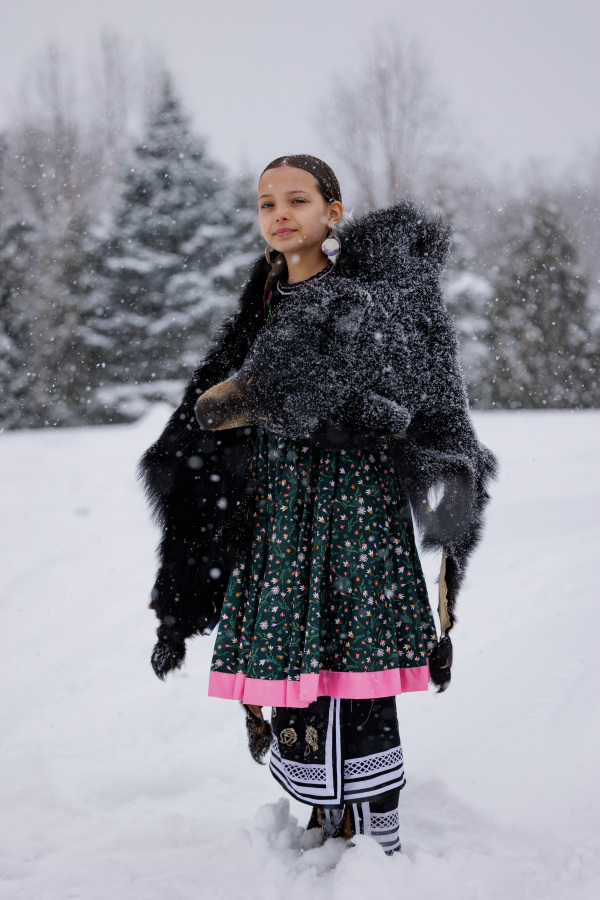
Watching her adorned in that robe, I saw something I never had as a girl. Not permission. Not acceptance that could be taken away. But belonging. Where I once wondered if I was strong enough, if I deserved to be there, my daughter simply stands in certainty.
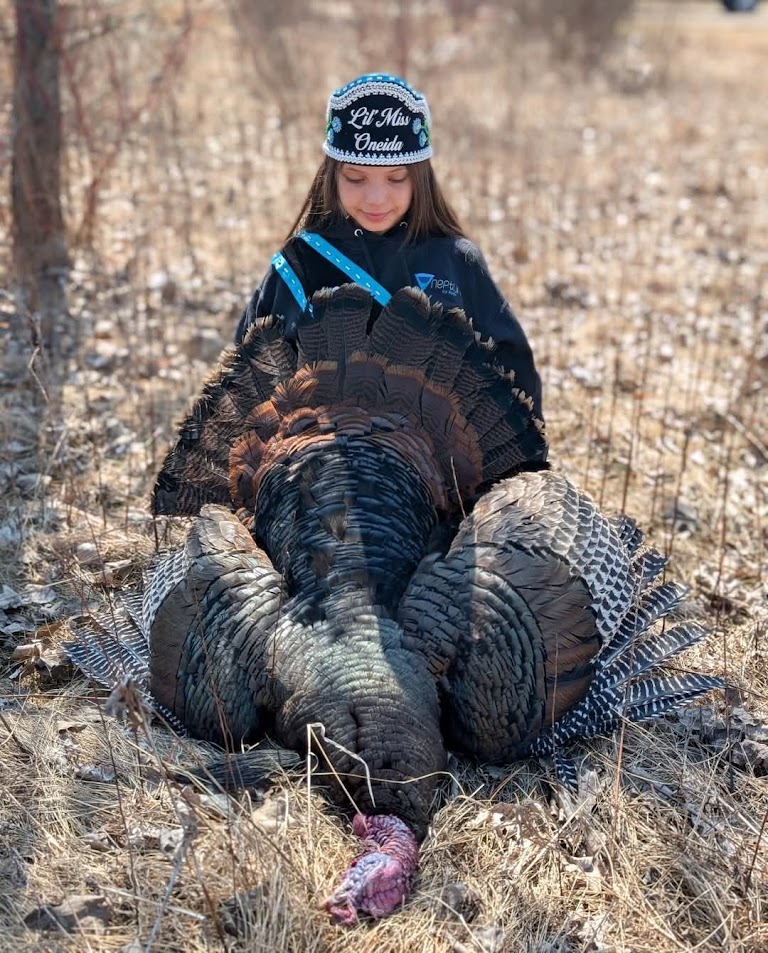
Food sovereignty is a lived practice. The following year she ran for Little Miss Oneida—and she won. Part of her platform was food sovereignty. As Little Miss Oneida, she harvested her first deer. In the spring, she harvested her first turkey. Each time, she laid down tobacco. Each time, she prayed. The harvest not only fed our family—it was shared with elders and members of our community. The greatest difference between us is not skill—it is belonging and encouragement.
As a girl, I loved hunting but sometimes questioned whether I was meant to be there. As a mother, I made sure my daughter never had to ask that question. I show her there are no limits to what she is capable of. The woods are not a place she visits. They are a place she belongs. She inspires me everyday.